Chip Resistance
The Home Manicure That Lasts Seven Days
Most home manicures fail in three days. The difference is preparation and thin layers, not the polish you bought.
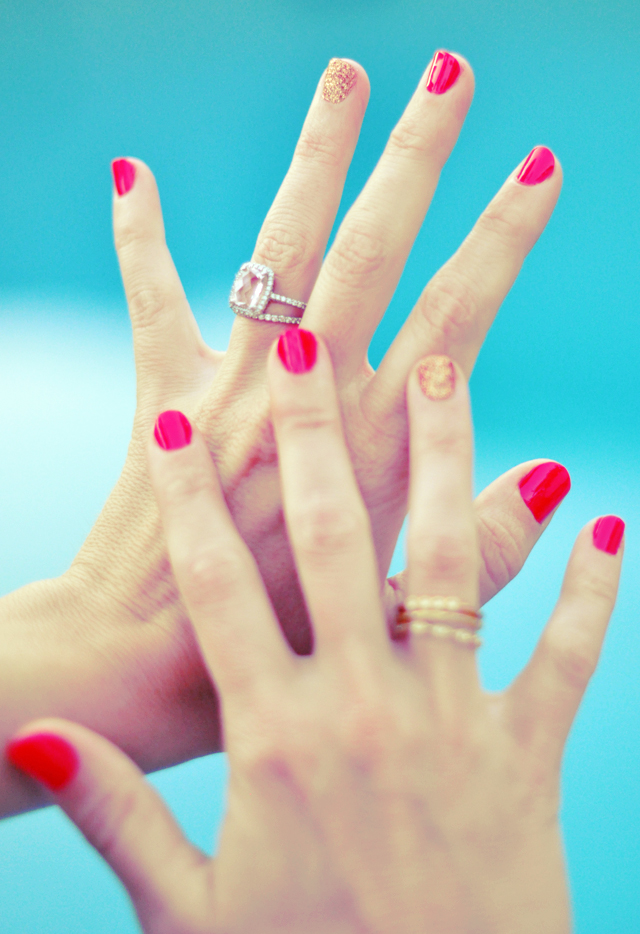
A home manicure that lasts a week is not a matter of buying better polish. It is a matter of preparation and patience, and almost everyone skips the parts that matter.
Here is the sequence that gets seven days out of regular polish.
The preparation (this is the whole game)
1. Clean the nail plate completely. Buff lightly with a fine-grit file, then wipe every nail with rubbing alcohol on a lint-free pad. This removes the oils that cause lifting. Do not touch your nails with your fingers after this step — the alcohol is undone by a fingertip of sebum.
2. Push back the cuticles gently. Do this after a shower when the skin is soft. Use a wood or silicone pusher. Do not cut the cuticles if you can avoid it — they are a seal against infection.
3. Shorten with a file, not clippers. Clippers create stress points at the edge where the nail plate separates. File in one direction rather than sawing back and forth. For a longer shape, keep the free edge under 3mm; longer edges chip faster.
4. Dehydrate, then bond. If you have a bonding or dehydrator product, apply it now. This is a cheat code for longer wear and costs very little.
The application
Thin layers, always. Three thin coats of colour outperform two thick coats. Thick polish dries on the surface and stays soft underneath, which is why a manicure looks smudged three hours after it looked dry.
Base coat. One thin layer. This is adhesion plus stain protection.
Colour. Two thin coats, two to three minutes apart. Wrap the tip: run the brush horizontally under the front edge of the nail. This is the single most effective anti-chip trick and almost nobody does it.
Top coat. A thicker layer here is fine. Apply it over the wrapped tip too.
Dry time. Twenty minutes without using your hands for anything. This is where most seven-day manicures are won or lost. Use a quick-dry drops product if you have one, but do not skip the twenty minutes.
Maintenance during the week
Top coat every two days. This is the highest-return habit in the entire process. A fresh top coat layer extends wear by several days.
Oil the cuticles daily. Cuticle oil keeps the nail plate flexible, which means it moves with the polish rather than cracking it.
Wear gloves for dishes. Hot water and detergent are the fastest way to destroy a manicure.
Fix chips immediately. A chip that is not touched up becomes a lifted edge, and lifted edges peel the whole nail.
On polish formulas
The formula differences between cheap and expensive polish are real but narrower than the price suggests.
Worth paying for: a good top coat and a good base coat. These determine adhesion and wear more than the colour.
Save on: the colours. A drugstore colour over a good base and under a good top coat performs close to a premium one.
Look for: 3-free or 5-free labelling if you care about specific ingredients, though the regulatory difference is more about marketing than safety in the US.
Gels at home, briefly
Home gel kits work, and they solve the wear problem entirely — two weeks without chipping. The trade-offs are the same as a salon gel: removal is the damage risk, and a UV or LED lamp means UV exposure.
If you go this route: never peel. Soak in acetone for 15 to 20 minutes, and use a soft pusher. Lifting a soaked soft gel takes seconds; lifting a dry one takes nail plate with it.
A realistic five-minute version
For the days when you do not have an hour:
- Alcohol wipe
- One thin base coat
- One thin colour coat, wrapped at the tip
- Top coat
Six minutes, and it will still get you four to five days. Not seven, but far better than the ten-minute version that chips in two.
Links on this page go to retailer search results — check for a base coat and top coat as a pair, since matching systems generally outlast mismatched ones.
Tested Glow may earn a commission from links on this page. No brand reviewed this article.
Frequently asked
Why does my polish chip on day two?
Almost always surface oil. Polish does not adhere to oily or unpolished nail plates. Wiping with rubbing alcohol immediately before applying base coat fixes most of this.
Do I need a base coat?
Yes, for two reasons: it improves adhesion, and it prevents pigment from staining the nail plate. Coloured polish applied directly to nails is what turns nails yellow over time.
How long should I wait between coats?
Two to three minutes between thin coats. Thick coats dry on the surface but stay soft underneath, which is what causes smudging hours later.